An Introduction to the Reserved List in Commander

What is the Reserved List?

First introduced in 1996, the Reserved List is a list of Magic cards that Wizards of the Coast has explicitly promised not to reprint in paper form, with the goal of preserving stability within the secondary market and protecting the interests of collectors. At the time of writing, the list accounts for roughly 700 cards originally printed between Alpha and Urza’s Legacy.

The quality and power of the cards included in the Reserved List varies greatly, from all-time classics like Ancestral Recall to niche gems like Dwarven Armorer. Whether they are powerful Vintage staples or borderline playable Creatures, neither these, nor any functional reprint can be issued in any future paper-based set.

Because of this self-imposed contract, not only are Reserved List cards retaining most of their value, but they are often increasing steadily in price. Most of the original Dual Lands are currently priced in the hundreds of dollars, while the coveted Power Nine can occasionally reach six-figure price tags.

While this can contribute to turn Legacy and Vintage into very inaccessible formats, some level of repercussion is also perceived in Commander. Players hoping to acquire an Underground Sea would be faced with a 300 $ price tag, while Timetwister demands at least 2000 $. Other famous cards, like Mox Sapphire, have been banned altogether since the very birth of the format.

In our latest article on Mana rocks I advanced the hypothesis that the original Moxen cycle would be relatively acceptable, power-wise, in Commander. They would definitely be powerful cards, but their power level, in my opinion, would not be excessive in a format where Mana Crypt is legal and Sol Ring is simply ubiquitous.

The real problem would not be the power of the cards themselves, but their availability. With most Commander players unwilling to spend thousands of dollars for a Mox Sapphire , making it suddenly legal would be little more than a publicity stunt in most playgroups. And with Wizards of the Coast having no chance to reprint any of the original Moxen, their availability can only decrease over time.

Mox Sapphire
Mox Sapphire, art by Dan Frazier

The Battlebond Precedence

Battlebond has proven that, taking full advantage of the multiplayer nature of Two Headed Giant, pseudo-Dual Lands can be easily reprinted in non-Standard legal sets. As a result, Commander and casual players can be provided with new, quasi-Reserved List powerful cards, while other Eternal formats remain virtually unscathed. Morphic Pool, for example, plays almost like Underground Sea in Commander, while Legacy and Vintage hardly even noticed.

Prior to the Battlebond Lands, Command Tower was the gold standard for extremely powerful Commander cards that, by design, could not really be played elsewhere.

This, I think, is a design space largely worth exploring for future non-Standard legal sets. In our latest Article on Mana rocks we already toyed with the idea of Commander legal Moxen. But, personally, I wanted to push the discussion even further.

A few weeks ago, I asked the Commander community on Twitter what they thought about a Commander legal Black Lotus and the response was surprisingly balanced.

March 5th Twitter poll: could Black Lotus be legal in Commander?

Black Lotus in Commander?

While some immediately argued that the card was simply too powerful for the format, other raised concerns not towards the card’s power, but towards its potential abuse in a format that already encourages recursion. If Black Lotus is mostly a one-shot Mana boost in Vintage, Commander would lend itself to cycling the card over and over, likely generating consistent Mana advantage over the course of the game.

But what if we could fix this? What if we could introduce a Commander version of Black Lotus that could not be continuously recurred, but that functioned as the card was likely intended to play in the early days of Magic?

Ephemeral Lotus, art from the WikiMedia Commons library

To be completely honest, I think it could also be possible to envision a less powerful version of the card that only generated colourless Mana, but this would make it harder to code it into a Commander-specific restriction.

So, would this Ephemeral Lotus be too good for Commander purposes?

As it is, the card compares quite favourably with Dark Ritual, playing as a free Sorcery speed version of the same card, with an increased output colour flexibility. To put things into perspective, at the time of writing Dark Ritual is played in a little over 15’000 decks on EDHRec.com, while Gilded Lotus, with the same Mana output, but a permanent nature and an increased Mana cost, is played in almost 50’000 decks.

Personally, this leads me to believe that a slightly adjusted Black Lotus, like the proposed Ephemeral Lotus from above, would be a powerful, but fairly acceptable card in Commander.

The real issue with a card like that, in my opinion, would not be its power level, as the card is not too far from the permanent value generated by cards like Mana Crypt and Sol Ring. The problem, I think, would be the impact a critical mass of Vintage-esque cards could have on the format. If the five Moxen and a Black Lotus would individually be fine, compared to the existing Mana rocks of the format, the problem would rise with all of these Reserved List-esque cards becoming legal alongside the existing Mana rocks of the format.

Mana Crypt
Mana Crypt, art by Mark Tedin

In other words, if the occasional turn 1 Sol Ring can be easily overcome in a multiplayer format, the consistency and redundancy provided by Mana Crypt, Mana Vault, Mox Diamond, Mox Opal, Chrome Mox, a Commander legal version of the five original Moxen and Ephemeral Lotus would probably affect negatively the quality of the format. It would not be in the individual cards, but in the sheer number of options a deck could end up having on turn 1, even as a one-shot boost.

If consistent and redundant fast Mana is the problem, we can set aside any attempt at revisiting the most egregious Mana rocks in the Revised List and turn our attention to other cards that could indeed be pseudo-reprinted, provided they are carefully adapted.

Playing it safe: the Magus Treatment

Bazaar of Baghdad is currently legal in Commander, but its thousand-dollar price tag has largely prevented it from showing up in most playgroups. Any attempt at reprinting a close equivalent of the card would risk shaking the fundamentals of the Vintage format, where Bazaar of Baghdad is a key component of Dredge and Survival of the Fittest decks.  

The safe solution Wizards of the Coast has already experimented with is to reissue the card’s effect by stapling it onto a creature. This slows down its activation and makes it more vulnerable to opponents’ removals.

Magus of the Bazaar
Magus of the Bazaar, art by Rob Alexander

Not only is Magus of the Bazaar a safe card to be printed in Eternal formats, but its power is so contained that it ends up seeing only fringe play in Commander, with EDHRec.com reporting the card in a little over 500 decks.

Applying the Magus treatment to Reserved list cards is a good starting point to increase availability of powerful effects in Commander, without risking major shakeups in competitive Eternal formats. Not only that, but Commander lends itself particularly well to importing these iconic effects on Creatures, especially if they are Legendary.

Just to start with an example, a card I would personally love to see brought into Commander is Drop of Honey, a sideboard staple in many Legacy Lands decks. Currently priced around 700 $, the card is largely beyond most Commander’s player reach, showing up in only 64 decks on EDHRec.com.

Nevertheless, I think a greater and more reliable presence of a board-impacting effect like Drop of Honey’s would be great in Commander, encouraging aggressive strategies focused on large Creatures. So, what if the effect was reprinted in the form of a Legendary Creature, too vulnerable and expensive to break Legacy and in a colour combination that is not within Legacy Land’s traditional scope?

Ylla, Mage of Honey, art from “The Dryad” by Evelyn de Morgan

Quite intuitively, this Magus treatment lends itself to revisiting many more powerful effects. If we look away from the most expensive cards on the Reserved List, we can find a lot of Commander legal gems that, however, Wizards cannot reprint in any future preconstructed deck. As a result, their availability for the average Commander player is very limited.

Transmute Artifact, for instance, comes with an almost 100 $ price tag and, as a result, sees play in only a little over 2’000 EDHRec.com decks. On top of being an interesting design, the recent printing of Prime Speaker Vannifar is a nice confirmation that Wizards of the Coast is not afraid to reissue powerful tutoring effects on Legendary Creatures. Sure, constant deck shuffling can be a pain in Commander games, but the card’s effect is not as unmanageable as one may think.

For simpler designs, static effects like City of Solitude could be thrown in the mix as well. Compared to other cards on the Reserved List, City of Solitude is relatively cheap, costing in the range of the ten dollars and currently seeing play in almost 1’300 decks on EDHRec.com. The card is a powerful staple in many Cubes, occasionally shutting down entire strategies and potentially serving as a nice form of protection in Green decks. It even sees play in Legacy Enchantress deck, where its card type synergies effectively with Argothian Enchantress’ namesake effect.

Eell and Marinen, art from “The Forging of the Sampo” by Gallen Kallela and Nael of the Solitude, art from “Oberon and the Mermaid” by Joseph Noel Paton

Applying the Battlebond Treatment to the Reserved List

The Magus treatment is an easy way to approach and rethink Reserved List effects, turning them into printable cards in Eternal format. However, when simply stapling existing effects on a Magi card is not a viable option, a lot of nuance comes into play.

I already mentioned how I think the Battlebond Lands are an extremely good example of adaptation of an existing design to take advantage of the very characteristics of a format. A lot more can be done with the core aspects of Commander, once we have realized it lays its foundations in being:

  1. A multiplayer format
  2. A singleton format
  3. A format with mandatory Commanders and a command zone
  4. A format with players starting at 40 life points
  5. A format with implicit colour restrictions

Morphic Pool is a card that plays amazingly based on the first aspects of the format. While not specifically printed for Commander, Guardian Project also applies perfectly to the format, thanks to the second principle. The already mentioned Command Tower largely benefits from the third principle, as it explicitly takes advantage of the existence of Commanders to build on existing mechanics, such as Mana generation.

On the opposite site of the spectrum, Serra Ascendant and Felidar Sovereign suffer from the repercussions of the fourth principle. With an inflated starting life total, not everything translates smoothly to Commander as a format.

Playing with these core aspects ensures that a lot of design space can be expanded upon, creating and finetuning cards with an implicit guarantee that they are not going to wreck other formats. In essence, sky is the limit.

Pop Culture and How to Manage the Blind Eternities

The Blind Eternities

The Blind Eternities are among the most interesting and fascinating “locations” within Magic’s Multiverse. As part of the game’s lore, the term Blind Eternities commonly refers to the space between Planes, a sort of chaotic zone existing between one world and another.

The Blind Eternities are universally described as dangerous, filled with powerful magic, aether and Mana that cannot be tamed by common wizards. This perilous area serves as a sort of connecting tissue between worlds and Planeswalkers are forced to traverse it to move between Planes.

As human being residing on Earth, we could be tempted to approach the concept of the Blind Eternities as our current understanding of outer space, though that would actually take us in the wrong direction. While outer space is largely devoid of life and almost completely empty, the Blind Eternities are full of energy and mysterious native beings of unconceivable nature.   

Moreover, the twisted nature of the Blind Eternities makes it impossible to map them. While we, as a species, have spent a good portion of the past centuries mapping the known Universe, the Blind Eternities do not possess fixed points and coordinates to refer to. As a result, Planeswalkers can get lost in this unconceivable maze of pure chaos and most of them tend to remain in this space as least as possible.

On top of all this, common living beings are unable to access this well of chaos. And if they were, they would likely be distorted and annihilated by the unimaginable forces of this hostile environment. So, no attempt has ever been made to establish a permanent outpost, thus far.

The result feels somehow similar to Star Wars’ hyperspace, albeit with less known routes and way more chaotic entities residing within it. Think of Solo: A Star Wars Story’s depiction of the Kessel Run, but instead of a spaceship, you need a Spark to traverse it.

Risultati immagini per solo kessel run
Summa Verminoth and the Kessel Run from Solo: A Star Wars Story (2018)

Not much else is known about the Blind Eternities, aside for the fact that the Eldrazi are native of this space, although we don’t know if they were spontaneously born here, if somebody created them or if they evolved to survive in this environment. It has however been confirmed that the Eldrazi Titans we have seen in card form on Zendikar and Innistrad are but manifestations of the true entities residing in the Blind Eternities. So, when you look at the card Emrakul, the Aeons Torn, you are actually looking at the entity’s presence on Zendikar and not at her true self.

The Eldrazi

Much like their presumed home, the Eldrazi are still largely a mystery. We do not know what they really want, why they consume and process worlds and what their role in the Multiverse is. Since their inception within Magic’s lore, they have been compared to similar beings within other fantasy and science fiction canons, although we don’t know enough of them to find a clear match.

For instance, the very title of Ulamog, the Ceaseless Hunger echoes Marvel’s Galactus and its constant need to consume worlds, while Kozilek, the Great Distortion’s mind-bending powers seem to call back to H. P. Lovecraft’s Cthulhu. Add to this the fact that we know Emrakul is aware of her own existence and nature and she has proven to have a plan when she was imprisoned in the moon of Innistrad. So, they are anything but mindless monsters, although, again, we do not know what their ultimate goal is.

Truth been told, we do not even know if the three Eldrazi Titans are indeed separate entities or manifestations of the same collective being. Some have theorized that they could serve as forces of coerced evolution, consuming and reshaping worlds to propagate life throughout the Multiverse. According to this hypothesis, their version of life would be simply different from our understanding of it. Wastes, in the end, are not barren environments devoid of energy. They simply generate a form of Mana that is different than the one Planeswalkers are more familiar with.

Nevertheless, the Eldrazi are among the most fascinating entities in Magic’s lore, as they truly set themselves apart from the plethora of evil masterminds, brutal oppressors and “bad guys behind everything“, all too common tropes in modern fantasy and science fiction.

Five requests I often have to ignore

Despite many players’ fascination and curiosity towards the Blind Eternities and the Eldrazi, Mark Rosewater has recently ruled out the possibility of a Magic set taking place within the Blind Eternities themselves. More specifically, his explanation came as a direct response to Maria Bartholdi’s suggestion to explore more of this yet unseen environment.

Risultati immagini per coax from the blind eternities
Coax from the Blind Eternities, art by Jaime Jones

Most of Rosewater’s reasoning behind this stance revolves around the fact that the Blind Eternities would feel too alien both for Wizards of the Coast’s Design Team and for the players themselves. The Design Team would be forced to play without core elements of Magic, such as the availability of five Basic Lands. Player’s expectations could also fail to be met, due to the lack of resonant elements most players are accustomed to in a Magic set. The Blind Eternities would shake the very fundamentals of players’ understanding of Magic and many would likely feel alienated by the end product.

The key aspect to remember, here, is that the Blind Eternities are not an environment like any other we have seen in the past. To put things into perspective: Phyrexia is a hostile environment of biomechanical abominations, but key elements like space, time, directions still exist. On the other hand, it is very likely that the very concept of above or after do not necessarily apply within the Blind Eternities, resulting in a chaotic and largely unrelateable setting.

Mark Rosewater’s reasoning is sound and understandable, but we may be missing a big opportunity, here.

The new big baddy

War of the Spark will likely culminate in the downfall of Nicol Bolas. I have shared my detailed predictions in a past article, but I think the majority of players would agree that the Elder Dragon’s downfall is now imminent. After years of scheming and plotting, players are justifiably lamenting some form of Bolas fatigue, so the time is probably ripe to pull the trigger on the character, whether permanently or not.

The obvious question, here, is: what’s next?

Risultati immagini per future sight mtg
Future Sight, art by Dan Scott

At the time of writing, we do not know what will come after War of the Spark and Magic’ Summer 2019 Core Set. A lot can be said about the need for a palate cleanser set, much like Kaladesh followed the full year of Eldrazi overdose we had with Battle for Zendikar and Shadows Over Innistrad. And then what?

Nicol Bolas has been presented as one of the most imposing and important characters in the Multiverse. With him out of the way, what would be a compelling new villain to propel future conflicts?

We already have a number of existing and known threats our main characters still need to deal with across the Multiverse. Heliod is still on Theros, alongside his unresolved business with Gideon Jura. The Raven Man is still shrouded in mystery and not much is known about its true identity and its goals, other than they somehow include Liliana Vess. Phyrexia as a faction is definitely on top of many players’ minds when it comes to iconic villains and unresolved narrative arcs. And at least one key character has expressed interest in returning to New Phyrexia to deal with the invaders.

The problem Magic is facing after Bolas’ defeat is how to follow up on his demise with a realistic, compelling and believable new threat. Interestingly, Magic is currently not alone in this.

Options from the Marvel Cinematic Universe

The Marvel Cinematic Universe (MCU) is going to face a similar problem in the very near future, with Thanos, “the bad guy behind everything”, likely to face his defeat in the upcoming Avengers: Endgame. And then what? How do you top a now iconic villain? How do you build from there?

Risultati immagini per avengers infinity war thanos
Thanos from Marvel: Infinity War (2018)

Introducing another arbitrarily powerful villain would likely result in most fans quickly losing interest. The Monster of the Week trope can work as an occasional divertissement, but having a powerful and iconic villain followed by a nearly identical powerful and iconic villain leads to a quick loss of interest among the fanbase.

One easy solution is to completely shift the paradigm. For the purposes of the MCU, instead of replacing Thanos with a new, equally imposing, equally powerful, equally cosmic villain, the story could now have our heroes face off against something completely different. So, no Annihilus and no Galactus.

Instead, I would expect the MCU to look elsewhere. The Skrull have been established as a unique faction and I would expect one of the upcoming sagas to revolve around the Secret Invasion arc. Or, with the likely introduction of time travel in Avengers: Endgame, the door could be open for Kang the Conqueror to make his debut in the MCU. The important thing is that the new villain or villains need to feel different and not a just rehashing of the same principle.

To provide an example of what I think you should try and not do, think about the DC Extended Universe (DCEU). Man of Steel introduce us to General Zod and, although the movie was far from good, the main villain had something interesting going on. Then almost all the following films had just nearly-identical undeveloped monstrosities as their main antagonists, from the incredibly powerful CGI monster that was Doomsday in Batman v Superman: Dawn of Justice, to the incredibly powerful CGI monster that was Incubus in Suicide Squad, from the incredibly powerful CGI monster that was Ares in Wonder Woman to the incredibly powerful CGI monster that was Steppenwolf in Justice League.

Risultati immagini per steppenwolf justice league
Steppenwolf from Justice League (2018)

When all villains feel somehow interchangeable, the stories blur together and the resulting experience feels very forgettable. If villains do not feel new, compelling and real, the entire story suffers. To quote Stephen King: “Monsters are real, and ghosts are real too. They live inside us, and sometimes, they win“.

Fortunately for them, Marvel and DC have decades of materials to pull from for their future cinematic endeavours. Magic, on the other hand, does not currently have such a long history of characters. Although the game is not without its iconic villains, it certainly does not have Marvel’s or DC’s plethora or characters. And many of the iconic villains established so far do not distance themselves enough from Bolas himself, in my opinion. The trope of “powerful and cunning bad guy with a mischievous plan” unfortunately applies to many Magic villains and most of them would not be able to fill Bolas’ shoes.

Much like the MCU, Magic is on the verge of dealing with one of its most iconic villains. So, if the MCU can easily turn to a very different type of new villain for its upcoming stories, Magic could take steps in the same direction.

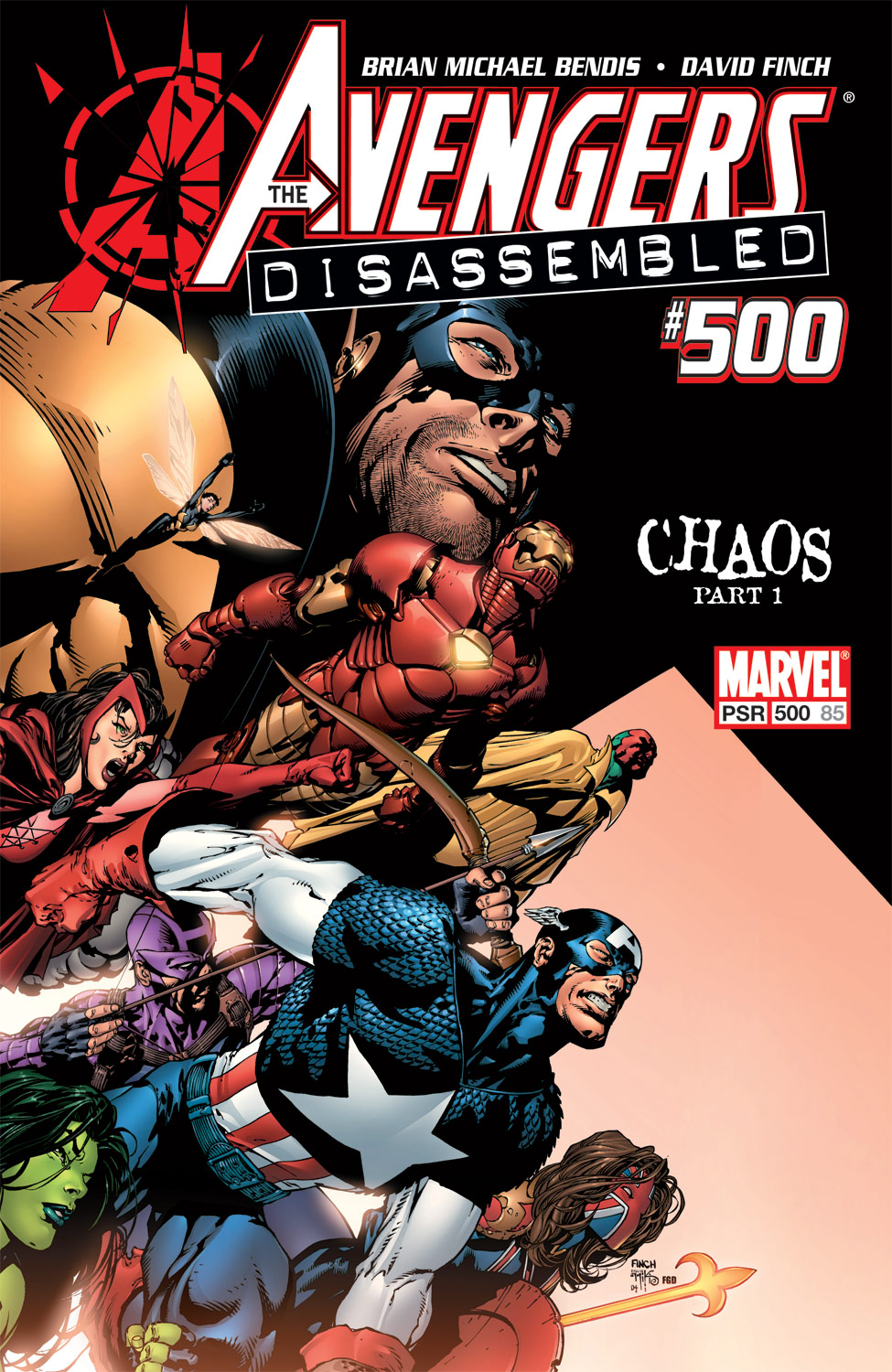
For example, Wizards of the Coast could consider introducing internal conflicts within the roster of main characters, with or without an external force infiltrating the main team of heroes. For instance, we could envision an equivalent of Marvel’s Avengers Disassembled narrative arc, with the story focusing on the disbanding of the Gatewatch and the resulting conflicts between former allies.

Risultati immagini per avengers disassembled 1
Avengers Disassembled, Chaos (Part I of IV), cover art by David Finch

Another option would be to revisit the concept of time travel in Magic, as the last iteration of this concept came with the Tarkir block. Oddly enough, despite this being an almost unprecedented feat in Magic’s story, the repercussions of Sarkhan‘s time travel have limited effects on the Multiverse. Sure, the timeline of the Plane was drastically altered, affecting most Tarkir-bound characters, but most of the other Planeswalkers seemed to hardly notice the change.

Revisiting time travel would pose an interesting challenge to Magic’s heroes, as the Gatewatch has not dealt with time travellers, yet. And let’s not forget Emrakul is still trapped in the moon of Innistrad. A moon conspicuously made of silver, the only material in Magic’s lore that can travel through time.

A Blind Eternities proposal

Taking into consideration Mark Rosewater’s comment on the unlikeliness of a Magic set taking place within the Blind Eternities, I think we can still work towards a compromise. Let’s keep in mind that:

  1. The Emrakul storyline still needs to find some kind of resolution
  2. We need something new and different to come after Bolas’ long arc
  3. The Blind Eternities are a still unexplored setting that fans have often asked about

What if one of the upcoming stories revolved around a Plane breaking into the Blind Eternities? We are no strangers to world-ending threats in the Multiverse, but what if, this time, it was not happening at the hands of a powerful villain, but simply as an occurring phenomenon?

Or, if Wizards wanted to provide a single source of this event, what if this was the by-product of Emrakul being trapped into Innistrad’s moon? What if she was calling upon the Blind Eternities themselves onto Innistrad, from within her cage? And what if she was also doing so across time, ideally summoning towards herself even the other two Eldrazi Titans, which the Gatewatch thought defeated?

Risultati immagini per emrakul the promised end
Emrakul, the Promised End, art by Jaime Jones

This would result in an admittedly challenging storyline to pull off, but it would allow to:

  1. Complete or at least progress the Emrakul storyline – ideally with the main characters forced to release her from her prison and set her free again throughout the Blind Eternities, potentially accompanied by the time-shifted Eldrazi Titans
  2. Introduce a narrative arc where the main opposing force is a slumbering, almost unwilling entity and not a present evil mastermind – again, carrying a strong Cthulhu vibe and not simply reiterating the concept of a mastermind villain setting a complex plan in motion
  3. Depict the Blind Eternities as a portion of the whole worldbuilding – most notably the portion of Innistrad shifting into the space between worlds, while the remainder of the set still features typical Magic elements

The (colourless) opportunity

Setting aside Magic’s lore, I think it is worth mentioning that colourless Mana as a concept has recently seen a resurgence in popularity, especially in an open-ended and casual format like Commander. At the time of writing, the latest episode of Game Knights by the Commander Zone has marked the first appearance on the show of a fully colourless deck, piloted by Ashlen Rose. Her deck was also the subject of a dedicated episode of the same podcast, which helped popularizing colourless as a valid deckbuilding option for Commander players.

On top of that, we have never had a single colourless preconstructed deck in any of the Commander supplementary products. As I have already mentioned, I fully expect this year’s Commander supplementary product to mark the first time a colourless preconstructed deck is presented to the players.

The sensibility of casual players towards colourless is recently increasing, while support towards this archetype is still minimal. While it certainly wouldn’t make sense for Wizards of the Coast to cobble together a set just to ride a fairly localized trend, there is a number of elements pointing towards the big opportunity that a Blind Eternities set would present.

Moreover, if the four consecutive sets of Battle for Zendikar and Shadows Over Innistrad led to a justifiable Eldrazi fatigue, having a single episodic set taking place between Innistrad and the Blind Eternities would probably be an interesting divertissement before or after a larger storyline.

Migratory Route (CM2)
Migratory Route, art by Winona Nelson

Considering War of the Spark is likely going to close Nicol Bolas‘ narrative arc and assuming this summer’s Magic Core Set is not going to introduce major shakeups in the current storyline, I would expect the following set to take us somewhere new, after a full year of Ravnica-bound storylines. Then we may be off to New Phyrexia or Theros, where unresolved plots still demand our heroes’ attention, or we may be taking a much-anticipated detour to Lorwyn.

Between these future – and yet pre-established – plots, I strongly believe we have the opportunity to kill two birds with one stone: advancing or resolving Emrakul‘s storyline and introduce Magic players to the unfathomable well of creativity that are the Blind Eternities.